


go away / 195 cm / poliester resin / 2020
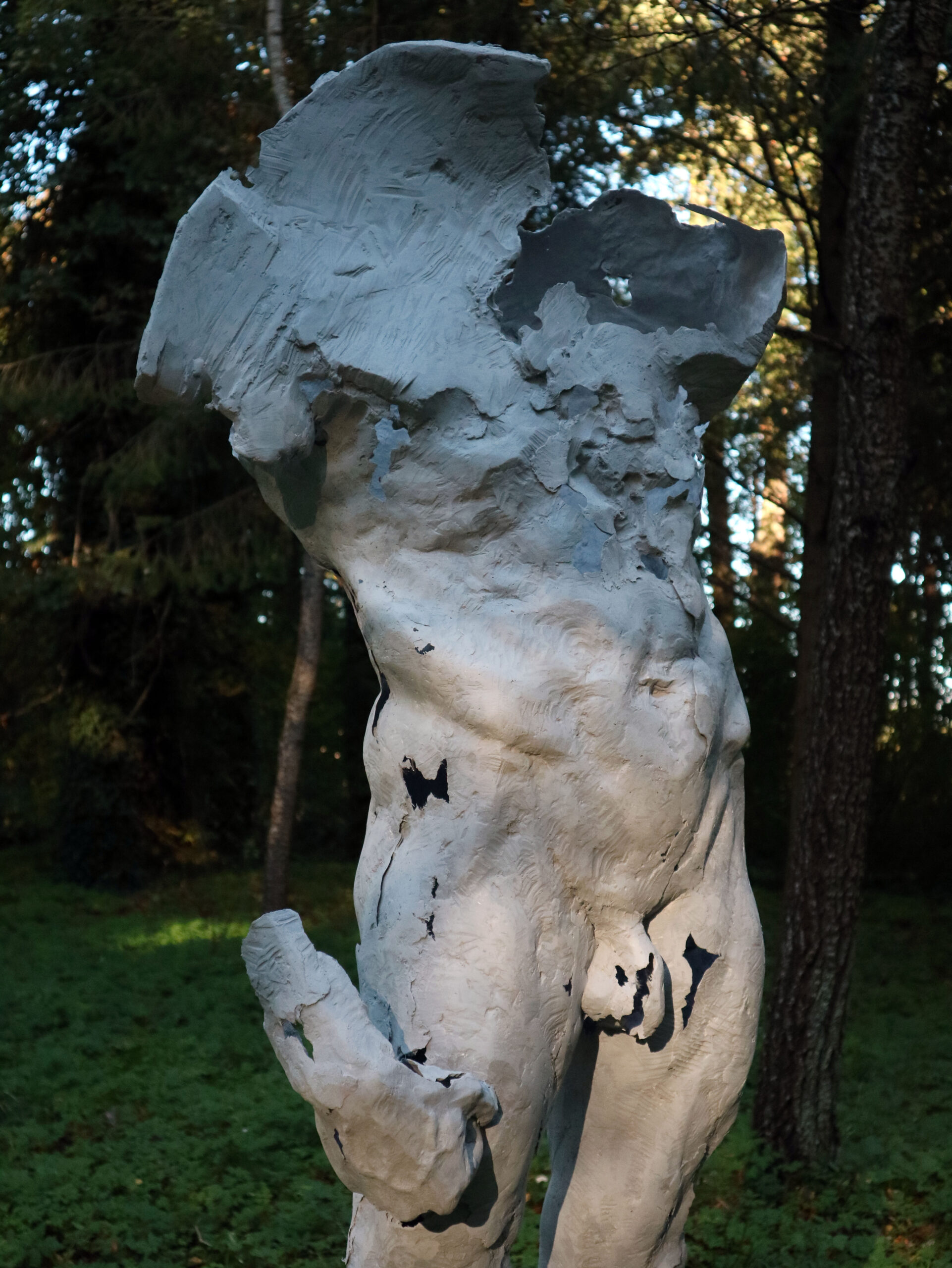
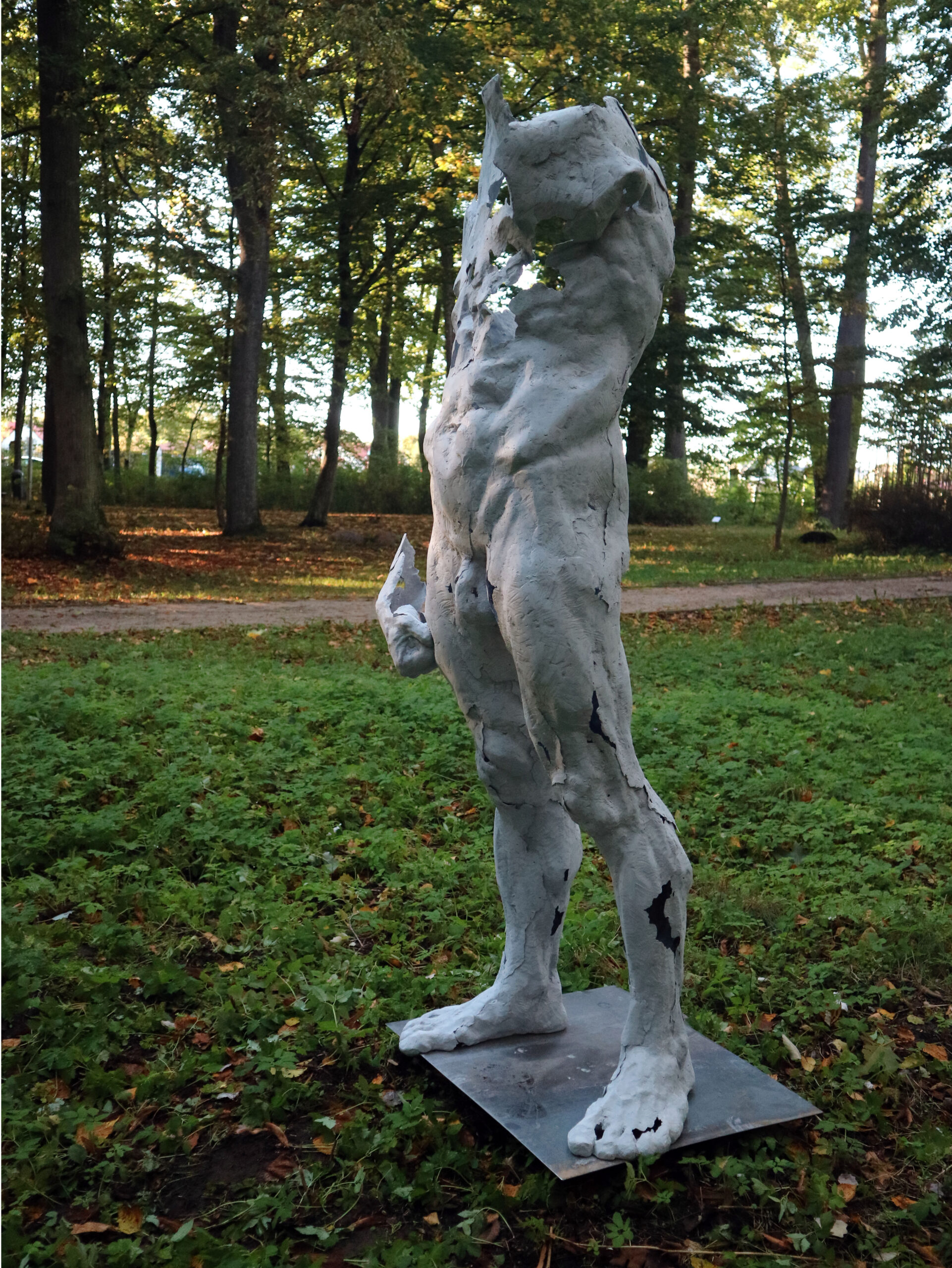
The sculpture presents a monumental male figure larger than life. Its upright posture, firmly planted legs, and clenched fist create an image of determination, confidence, and inner strength. However, the figure’s expression comes not only from the gesture itself, but also from its calm and controlled stance, which clearly marks a boundary between I and you.
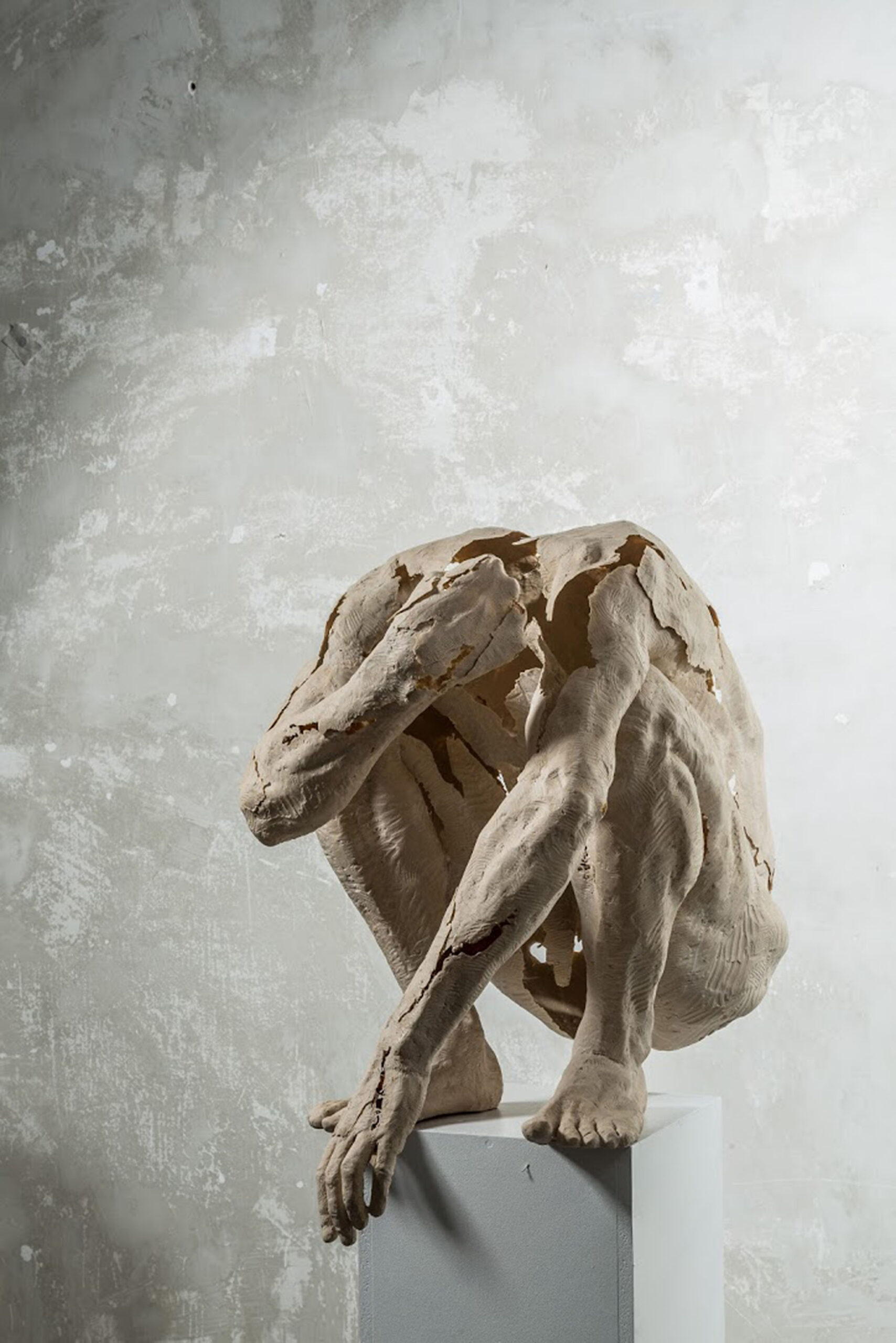
The work is built in a way that creates a strong contrast. Although the figure looks solid and powerful, it is made of thin, openwork polyester resin shells. From a distance, the sculpture appears heavy and massive. Seen up close, it reveals a light and delicate structure. This contrast questions the idea of strength and shows the difference between appearance and reality.
The artist has deliberately removed parts of the body and the head, which normally give a person their individual identity. As a result, the figure no longer represents one specific person but becomes a universal image of humanity. The viewer’s attention is directed toward the gesture, the posture, and the emotions rather than the identity of the figure.
The title GO AWAY refers to problems that are becoming more visible in today’s world: social division, exclusion, fear of people who are different, and the need to create boundaries between us and them. The sculpture does not say who is speaking or who the message is directed to. Instead, it invites viewers to reflect on the sources of hostility, fear, and aggression, as well as on the social mechanisms that create conflict and separation.
The contrast between the monumentality of the figure and its light, almost fragile construction becomes a metaphor for contemporary human nature. It suggests that behind the image of confidence and strength there may also be fear, insecurity, and vulnerability. In this way, the gesture of rejection can be understood not only as a sign of power, but also as an attempt to hide one’s own weakness.


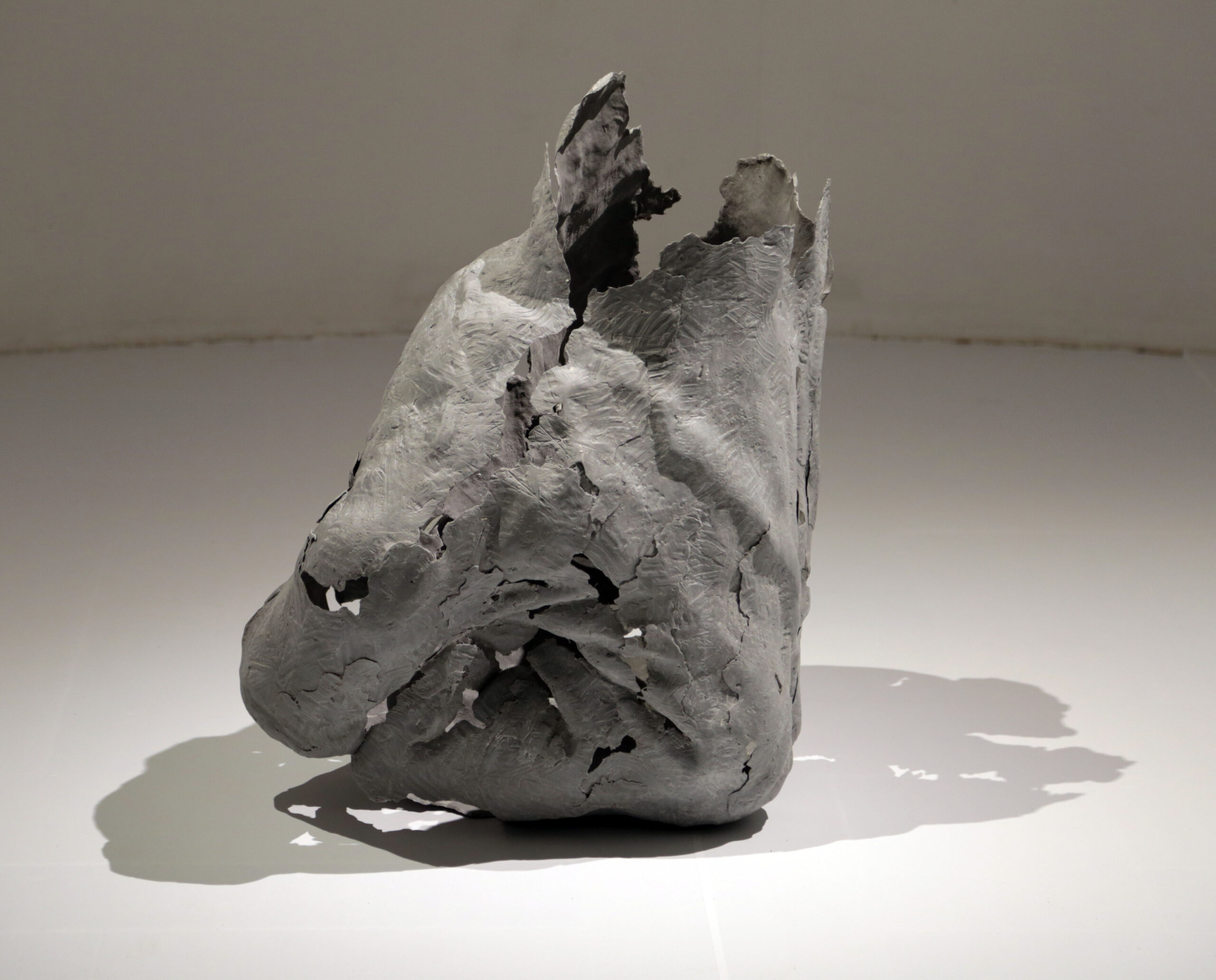

power / 70 cm / poliester resin / 2020
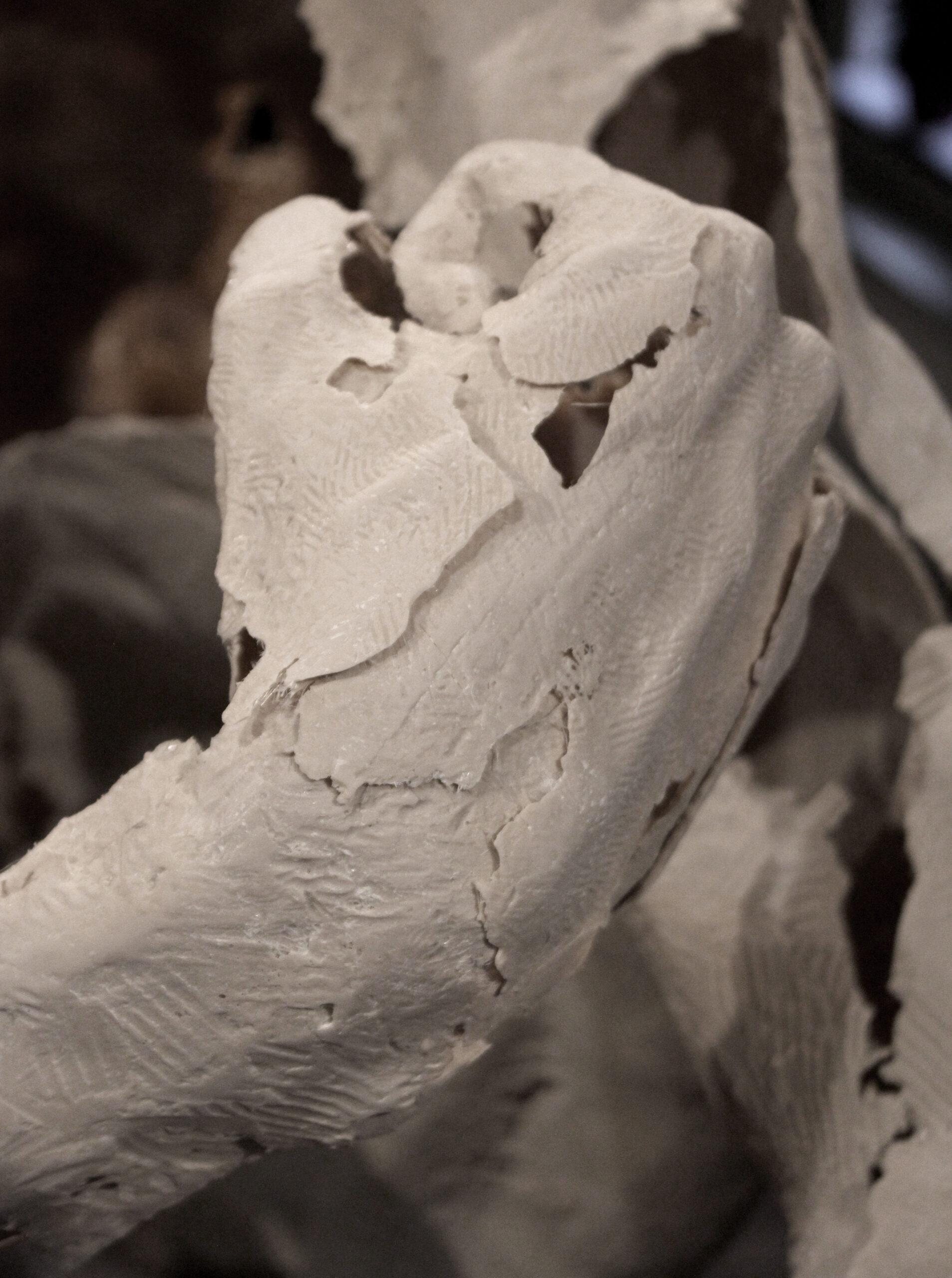
The sculpture depicts a monumental fist, enlarged beyond life size—one of the most recognizable gestures of human expression. Across cultures, the clenched fist symbolizes power, strength, determination, rebellion, solidarity, and resistance, but also aggression. Removed from its original context and isolated from the human body, it becomes a universal sign of intense emotions and tensions that exist on both the individual and the collective level.
Rather than being modeled as a solid mass, the sculpture is constructed from lightweight, thin-walled elements that form an open spatial structure. The visible fragmentation and openness of its construction deprive the monumental gesture of its material certainty. What appears from a distance to be a compact and massive form reveals itself, upon closer inspection, as a network of delicate shell-like surfaces creating the illusion of a solid volume.
The enlarged scale intensifies the expressive force of the gesture. The fist ceases to function merely as a fragment of the human body and instead becomes an autonomous sign—a symbol of energy, resistance, and agency, but also of violence and domination. Whether the viewer interprets it as a gesture of protection, struggle, or threat remains an open question, inviting individual reflection.
The ambiguity of the title POWER further expands the field of interpretation. The word encompasses a range of meanings, including strength, force, energy, might, and authority, without privileging any single interpretation. Rather than assigning a fixed value to these meanings, the sculpture invites reflection on the very nature of power and asks whether its source lies in genuine strength or merely in its appearance.